
Excessive Drill Bit Wear
How Advanced Drifter Technology Delivers Faster Drilling
For drilling contractors, few line items eat into margins faster than consumable costs. Fuel is one. Drill bits are another. Unlike fuel, bit wear is harder to see until it’s already costing efficiency and money. A bit that wears out too soon means slower penetration, longer cycle times, and thinner margins on every hole drilled. Understanding what drives excessive bit wear and how to combat it can make a big difference to the bottom line.
Operator Input and Excessive Wear
While there can be multiple factors that lead to premature drill bit wear—heat, abrasion, repeated use—one of the primary factors is the operator. A rock drill hands the operator a full set of controls, from feed pressure to rotation speed to percussion. It’s up to them to dial those settings in to match the ground they’re drilling. It’s not unlike driving a car: push it too hard for the conditions, and something wears out faster than it should.
Rotation speed is a good example. Crank it up and the drill can penetrate faster, but that same speed accelerates wear on the bit’s buttons. If the settings aren’t right for the rock conditions, the consumables take the brunt of it. That’s why driller experience is important: an experienced operator reads the rock and adjusts on the fly. A less experienced operator may not catch the warning signs until the bit is wearing out faster.
How to Tell When a Drill Bit Needs Changing
Most drill bits are covered in carbide buttons, which are essentially the bit’s teeth. Like any cutting surface, they dull with use. The clearest signal of that wear comes out of the hole itself. A sharp bit blasts out big, heavy cuttings as compressed air clears the hole. As the buttons wear down, those cuttings get progressively smaller. Left too long, a worn-out bit stops producing chips altogether and starts producing something closer to powder.
That shift matters because it’s a direct measure of penetration rate. Big chips mean the bit is efficiently fracturing rock. Powder means it’s grinding rather than cutting, and the same hole that once took minutes to drill can start taking dramatically longer. Watching cuttings size is one of the simplest, most reliable ways operators gauge bit condition in real time. Swapping a bit before it fully wears out keeps downtime minimal, since bit changes themselves are quick. It’s the cost of the consumable, not the time to replace it, that really adds up.
Where Drifter Technology Takes Over
Rock isn’t uniform. Conditions can shift whether it’s a 10-foot hole or 100-foot hole being drilled. An operator can set up correctly at the collar and still run into inconsistencies well below the surface that no amount of experience can fully anticipate in advance. This is where advanced drifter technology comes in.
An analogy could be that of how modern trucks assist with backing up a trailer. The driver still must get the truck pointed roughly in the right direction, but once it’s close, the technology takes over and handles the fine adjustments. Advanced drifters work the same way. The operator gets the settings into the right range for the rock they’re drilling, and the drifter’s internal technology continuously compensates for the inconsistencies that show up as drilling progresses, protecting the bit from the excessive wear those variations would otherwise cause.
FRD’s Answer: Dual-Dampening Technology
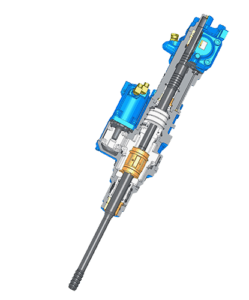
The core technology behind that compensation is dual dampening, and it’s built into FRD’s HD800 Series Drifters. Dual dampening absorbs and manages the shock and rebound energy generated as the drill string encounters changing rock conditions, rather than letting that energy transfer straight into the bit. The result is less punishment on the buttons, more consistent penetration, and a bit that holds its cutting edge over far more footage—and a real dollar impact.
A single drill bit can run anywhere from a couple hundred dollars to well over a thousand dollars, depending on size and brand. Every extra foot a bit can drill before it needs replacing is money that stays in a contractor’s pocket. Dual dampening technology also helps close the experience gap. It doesn’t just protect the bit for a skilled operator, it helps a less experienced driller get results closer to what a veteran would produce, because the drifter is compensating for variables the operator might otherwise miss.
In an industry where fuel and consumables are two major expenses, technology that extends bit life while increasing drilling speed offers a path to a more productive, more profitable operation.