
Drilling Smarter, Not Harder
How Modern Technology Is Making Quarry Blasthole Operations More Efficient
Drilling blast holes in a quarry sounds straightforward enough. Create a hole in the ground to put the correct amount of power in the proper place at the right time at minimal cost. But, it’s not quite that simple.
Weather, geology, geography, equipment, and operator skill can all eat into production time and drive up costs. The good news is that the right drilling equipment—featuring high-output compressors, self-adjusting dampening systems, and cleaner Tier 4 engines—can give quarry operators and drilling contractors the tools to drill blastholes more efficiently.

The Hidden Costs of Inefficient Drilling
Drilling efficiency losses can come from multiple sources. A drilling contractor trying to control overtime costs to a standard eight-hour day can see that window shrink when the quarry is an hour down a dirt road from the nearest town with lodging. Round-trip commute time cuts valuable time out of every productive shift, compounding across an entire crew and an entire season.
Rock conditions create one of the most technically demanding challenges. The industry standard holds that harder, more consistent rock is actually easier to drill efficiently. That’s because it’s predictable and operators can run their machines at full capacity without fear of getting stuck. The challenge comes with variable rock: formations that alternate between hard and soft layers, or that contain voids where no solid material exists. In those conditions, drillers must constantly “tiptoe,” dialing back machine output to avoid getting the drill string stuck. The machine’s engine keeps running and burning fuel, but production drops, which can be a double hit to operating efficiency that compounds over the course of a week or a season.
Weather impacts operations at both extremes of the thermometer. Rain turns sloped quarry benches into slippery hazards. Snow can bury hole markers entirely. In high-heat environments, temperatures approaching 120°F force operators to monitor equipment closely and throttle back when necessary. On the other end of the scale, drilling in sub-zero conditions can make starting diesel engines difficult.
High-Output Compressors Keep Air Where It Belongs
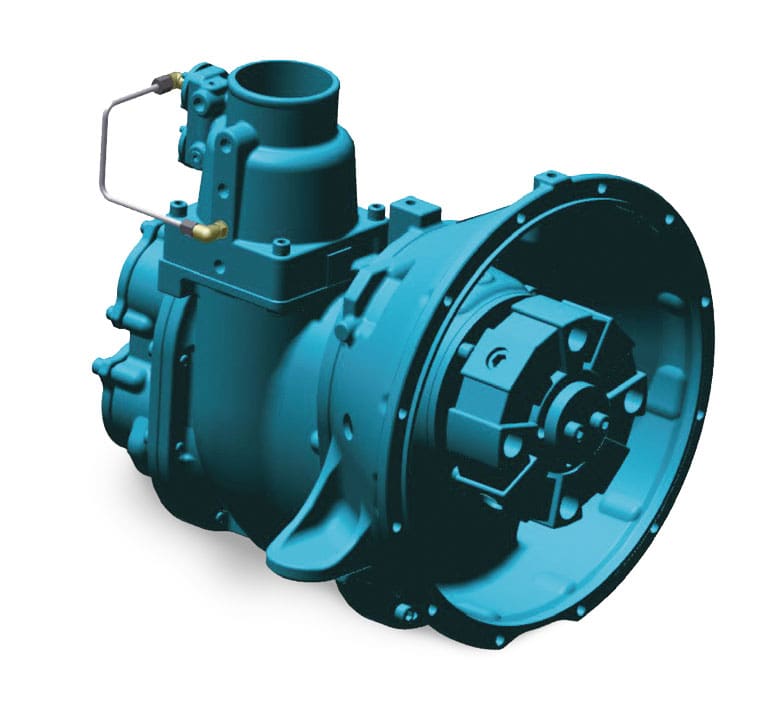
One of the most effective hardware solutions to variable rock conditions is the high-output compressor, which is needed to clear debris. As a drill bit cuts through rock, it generates cuttings (debris from the material being penetrated). Compressed air is pumped down the drill string and back up the hole to carry those cuttings up and out of the top of the blasthole. It’s a continuous flushing process, and it only works if there’s enough air volume and pressure to do the job.
Voids are the wildcard. When the drill encounters a cavity in the formation, air escapes laterally into the void instead of traveling up the hole. Suddenly, the system has less air available to move cuttings, which can result in cuttings falling back onto the bit, reducing penetration rate and risking a stuck drill. A high-output compressor addresses this directly: by maintaining a larger reservoir of available air, the system can compensate for losses through voids and still deliver enough volume to flush the hole properly. The operation keeps moving even when the geology changes.
Self-Adjusting Dampening: Leveling the Skills Gap
If the high-output compressor is the answer to air management in variable formations, the self-adjusting dampening system addresses the human variable. Experienced drillers have always been able to “read” rock. They feel and hear the changes in formation hardness through the machine, and they adjust percussion pressure, feed force, and rotation speed accordingly. That skill can take years to develop. A less-experienced operator might make the same transitions more slowly or not notice them at all, stalling the drifter in soft rock, bouncing uncontrollably in hard rock, or, in the worst case, getting the drill string stuck.
The auto-dampening system functions like the suspension on a car. Just as quality shock absorbers respond to changing road surfaces without the driver needing to intervene, the dampening system on the drifter adjusts to changing rock conditions. Drilling conditions can go from hard to soft or soft to hard without waiting for the operator to react. The result is that most operators can perform at a level that previously required a more experienced and skilled driller.
Dual Dampening System:
FRD has further advanced this concept by adopting a dual dampening system.
This system consists of two types of dampers: One ensures continuous contact between the bit and the rock, allowing impact energy to be efficiently transmitted to the rock.
The other is designed to absorb the rebound force generated from the rock by the impact energy. The dual system provides greater responsiveness across a wider range of rock conditions, reducing the number of manual adjustments the operator needs to make and broadening the margin for error. That translates to better production numbers, while also making it easier for drilling contractors to bring new operators up to speed.
The engine powering the machine can be another factor in drilling efficiency. The latest generation of top-hammer drills, including the HCR Series, uses Tier 4 and Tier 4 Stage 5 engines. The efficiency benefit here is less about raw output and more about regulatory compliance and operational continuity.
In heavily regulated states like California, older machines with higher emissions face restrictions that limit how long and how often they can legally operate. Carbon credit systems effectively penalize contractors running aging equipment. A contractor operating newer Tier 4-equipped machines earns more carbon credits, which translates directly into more allowable operating hours. A contractor who upgrades to a Tier 4 machine runs both cleaner and longer, which over the course of a season can mean more drilled footage and a lower cost per hole.
Taken together—high-output compressors managing air volume through difficult formations, dual dampening systems reducing operator skill dependency, and compliant engines extending operational hours—today’s top-hammer drills help overcome efficiency challenges that have long defined quarry blasthole drilling.